


Obsolete Punch and Shear Machine Parts: Can They Be Remade?
September 8, 2026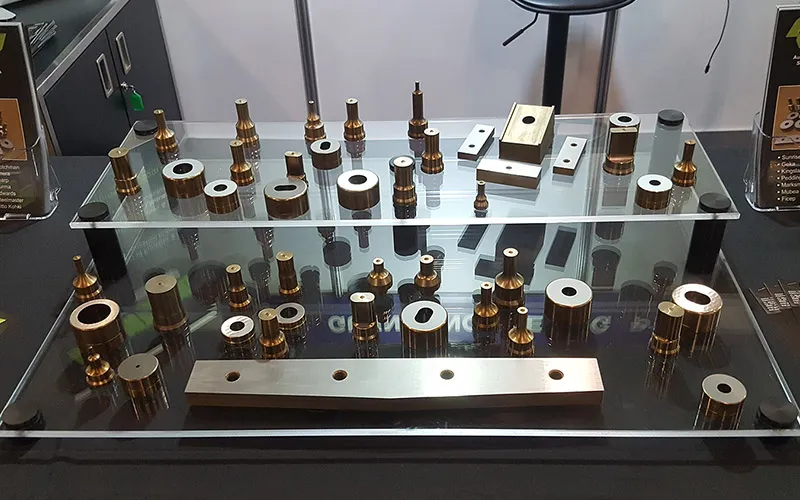
Need an obsolete punch or shear machine part remade in Melbourne? Submit the component specification for a machining review and quote.
An obsolete punch or shear machine part may be remade when its dimensions, material and operating requirements can be established. Gunna Engineering manufactures punches and dies and provides general and repetition engineering from Keysborough. We assess the component first; an old sample alone does not prove that safe, accurate reproduction is possible.
This is a narrower, defensible service than promising replacement parts for every industrial or packaging machine. Our general engineering and CNC machining capabilities support components made to customer specifications using CNC turning, CNC milling, EDM spark eroding, CAD/CAM and surface grinding.
When Is Remanufacturing Worth Investigating?
A machining review is useful when the original manufacturer no longer supports a mechanical punch or shear, a catalogue part is unavailable, or a maintenance team needs a controlled repeat supply. The decision depends on whether the required geometry and material can be verified and whether the component sits within our workshop capabilities.
Where the requirement concerns tooling rather than a general machine component, our punches, dies and shear-blade work is the more relevant starting point. We will not treat safety-critical assemblies, undocumented modifications or unknown materials as routine copy-and-machine jobs.
What Information Makes the Part Quote-Ready?
The strongest enquiry gives us traceable information before production downtime forces a rushed decision. Send the following where available:
- Machine identity: Provide the make, model, serial details and the component’s function.
- Technical reference: Supply an issued drawing, CAD file, tolerances or a measurable sample.
- Material and finish: State the known material, heat treatment, plating or surface requirement.
- Failure evidence: Explain the wear, fracture, distortion or fit problem and include clear photographs.
- Quantity and timing: Confirm whether one part or a low-to-medium repeat batch is required.
Our article on batch manufacturing for custom metal components explains why repeat orders need controlled specifications rather than assumptions based on a worn master part.
Separate Machining Feasibility From Plant Safety
Machining a component and approving a machine for service are different responsibilities. Safe Work Australia’s plant guidance explains that plant risks must be managed across use, maintenance and modification. The plant owner and appropriately competent people remain responsible for design verification, guarding, installation and return-to-service decisions.
We can assess whether the requested manufacturing work fits our equipment and information requirements. We cannot infer an unknown design load or certify an altered machine merely because a replacement component can be produced.
Dimensional inspection of the worn part may reveal damage rather than the original geometry. Where tolerances, datum points or material properties cannot be established, we may ask for an approved drawing, an unworn mating component or further technical direction. That prevents deterioration from being copied into the replacement.
Submit the Failed Part for a Machining Review
Send the machine details, drawings, photographs, material information, quantity and required date through our component quotation form. We can review whether the obsolete punch or shear machine part is suitable for manufacture, identify missing information and define the next practical step.