


Square Punches and Dies in Australia: Made to Your Dimensions
October 28, 2026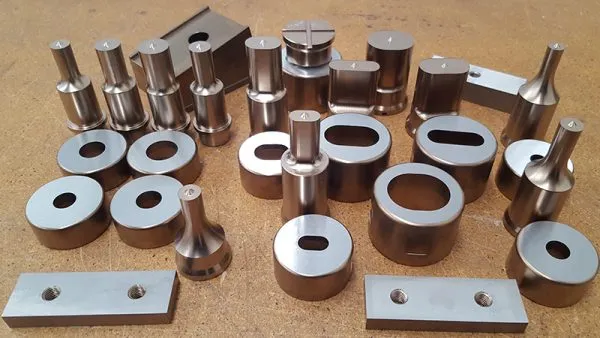
Square punches and dies in Australia from Gunna Engineering are made to specified dimensions for compatible machinery. Submit your exact details today.
Square punches and dies in Australia create defined square openings for fasteners, fabricated frames and specialised equipment components. Accurate dimensions, suitable clearance and confirmed machine fitment reduce the risk of distorted corners, excessive burrs and premature tool wear
What Are Square Punches and Dies Used For?
Square holes are common where a fastener must resist turning or a component needs a defined non-round opening. A dedicated punch-and-die set can create repeat openings without drilling several holes and removing the remaining material by hand.
Typical applications may include:
- Bolt and fixing points: Square openings can suit coach bolts and similar fasteners that resist rotation.
- Frames and brackets: Fabricated parts may need shaped openings for posts, fittings or locating features.
- Equipment components: Replacement parts can require a square profile that standard round tooling cannot create.
- Repeat jobs: Dedicated tooling may reduce secondary cutting and finishing across a production run.
How Are Square Punches and Dies in Australia Specified?
Ordering starts with verified job and machine information. Width and length alone are not enough, since the punch body, shank, keyway, die profile and clearance must suit the relevant punch-and-shear machine.
Include these details in the enquiry:
- Hole size: Provide the required finished-hole dimensions.
- Machine: State the brand, model and tooling station.
- Material: Identify the type, grade and thickness.
- Tooling style: Confirm the required punch and die style.
- Corners: State any corner-radius requirements.
- References: Include part numbers, drawings or clear photographs.
- Reference tool: Supply measurements from an undamaged tool where available.
A worn sample may no longer represent its original dimensions. Gunna Engineering can assess the supplied information, but final compatibility cannot be assumed from a photograph alone. Our punches, dies and blades service covers square, oblong, hexagonal and non-standard shapes produced on CNC machinery.
Why Do Clearance and Machine Condition Matter?
Clearance is the dimensional gap between the punch and die opening. The correct gap varies according to the metal type, thickness and operating conditions. Incorrect punch-and-die clearance can increase burrs, reduce edge quality and place unnecessary stress on the tooling.
Tight clearance may raise punching force and tool stress. Excess clearance may increase burrs or leave a tapered opening. Poor alignment, worn holders and damaged machine components can also affect results, even where the tooling dimensions are correct.
Operators must follow machine instructions and workplace controls. The Safe Work Australia model code for plant risks outlines broader duties relating to machinery, equipment and tools.
What Should Be Checked Before Ordering?
Accurate information reduces avoidable delays and fitment errors when sourcing square punches and dies in Australia. It also allows any uncertainty to be identified before production begins.
Check the drawing against the intended hole, confirm the machine details and identify the workpiece material. Accurate CNC tooling compatibility also requires the mounting dimensions, machine model and tooling station to match—not only the cutting profile.
Confirm Your Tooling Requirements Before Ordering
Custom dimensions for square punches and dies need a matched tooling set, confirmed machine information and suitable clearance. They do not correct worn holders, poor alignment or equipment operating beyond its rated capacity.
Learn more about Gunna Engineering and its Australian-made tooling, then use the contact form to send your drawing, dimensions, material details and machine model. Submit complete specifications to request an accurate assessment.