


Surface Grinding Services for Tooling Refurbishment and Component Recovery
August 27, 2026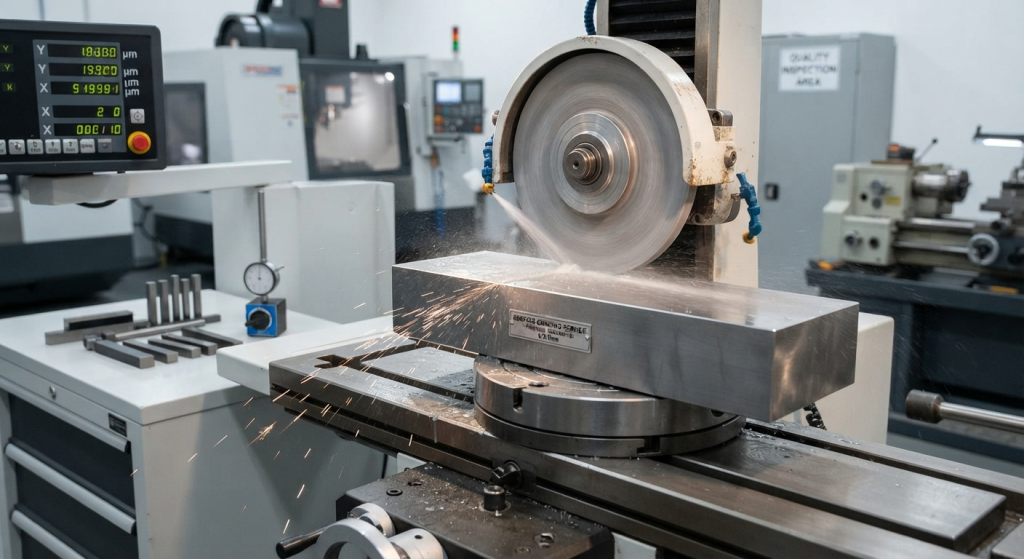
Gunna Engineering runs surface grinding services in Melbourne for tooling and component recovery. Send drawings and specifications to receive a quote.
Worn tooling does not always need immediate replacement. Our surface grinding services remove controlled amounts of material to restore flatness, parallelism and a usable surface finish where the component remains suitable for refurbishment.
When Do Surface Grinding Services Support Tooling Refurbishment?
Surface grinding is an abrasive machining process used to produce flat, accurate surfaces. For refurbishment work, we assess the component, its wear pattern, available dimensions and intended function before determining whether grinding is appropriate. The process can correct surface wear or prepare a part for continued use, but it cannot make every damaged component serviceable.
A practical assessment matters because excessive wear, cracking, distortion or insufficient remaining material may make replacement the safer or more economical option. We work from customer drawings, dimensions or component samples so the proposed machining scope is tied to the actual part—not an assumed ‘original’ specification.
Which Components May Be Suitable for Surface Grinding?
Our surface grinding services may be considered for tooling and general engineering components that require controlled material removal across a flat face. Suitability depends on material, geometry, condition and the tolerance required after machining.
Typical assessment candidates include:
- Production tooling: Worn working faces may be ground where adequate material remains.
- Dies and forming tools: Surface correction can help re-establish a functional face before the tooling returns to service.
- Machine components: Flat mounting or contact surfaces may be refinished to support alignment and fit.
- Wear plates: Grinding can restore an even contact surface when damage is within recoverable limits.
- Jigs and fixtures: Accurate faces can support positioning and repeatability during production.
We manufacture punches, dies and blades and also provide general engineering for low- to medium-batch components. That broader workshop capability helps us evaluate whether a component should be surface-ground, machined by another method or replaced.
What Information Helps Us Assess a Grinding Job?
A useful quote starts with usable technical information. Send us the component, a drawing, or clear dimensions together with details about the material and the surface that requires attention.
Before work proceeds, the assessment should establish:
- Condition: Identify wear, damage, corrosion, heat effects or visible cracking.
- Material: Confirm the grade where possible because material affects machining decisions.
- Dimensions: Record critical sizes and the permissible amount of material removal.
- Function: Explain how the surface locates, seals, supports or contacts another component.
- Quantity and timing: State whether the job is a one-off recovery or part of a batch requirement.
Grinding is only one part of responsible plant maintenance. Safe Work Australia’s guidance on managing risks of plant in the workplace reinforces the need to maintain and inspect machinery; refurbished parts must still be assessed within the machine’s broader operating and safety requirements.
Surface Grinding Services in Melbourne: Request an Assessment
Our Keysborough workshop provides surface grinding services with a stated capacity of 400 mm by 200 mm. We do not promise that every worn part can be recovered. We assess the component and available
specifications first, then discuss a practical machining path based on its condition and intended use.
To reduce quote delays, contact us with a drawing, dimensions, photos and the required finish or tolerance. Ask Gunna Engineering to assess your tooling or component and provide a no-obligation quote for suitable surface grinding work.