


Triple Tempering Tool Steel for High-Impact Punches & Dies
May 8, 2026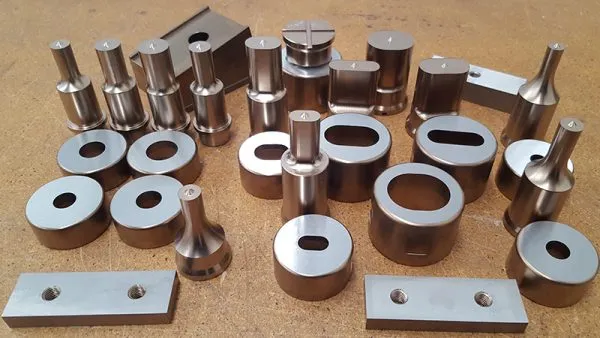
Achieve stable high-impact punches and dies with triple tempering tool steel manufactured by Gunna Engineering in Melbourne using precision machining.
Punches and dies used in demanding industrial applications require materials that maintain stability under repeated mechanical impact. Triple tempering tool steel supports this requirement by improving component stability and helping produce a tighter grain structure during heat treatment. These characteristics make the material suitable for tooling that must perform consistently across high-load punching operations.
Material Stability for Repeated Punching Performance
High-impact punching places significant stress on tooling components during daily production cycles. Triple tempering tool steel helps address this challenge because the heat-treatment process stabilises the steel structure and improves resistance to repeated mechanical load.
At Gunna Engineering, we manufacture punches, dies, and blades using CNC machinery that allows tighter control over dimensions and tolerances. Our tooling undergoes heat treatment in a vacuum furnace followed by triple tempering to produce a more stable component with a tighter grain structure suited to repeated punching applications.
Why Material and Process Matter in Punches and Dies
Punching tools perform reliably when machining precision, material quality, and heat treatment work together. Several practical manufacturing considerations influence the long-term durability of punches and dies.
Important considerations include:
- Stable Component Structure: Vacuum furnace heat treatment followed by triple tempering helps stabilise the steel structure, which supports predictable behaviour during repeated punching operations.
- Tighter Grain Structure: A refined grain structure contributes to improved material consistency, helping punches and dies perform more evenly during high-impact production cycles.
- Accurate CNC Machining: Precision machining helps maintain correct tolerances and alignment so punches and dies fit properly within punching or shearing equipment.
- Versatile Tooling Shapes: Punches can be produced in round, oblong, square, hex, or custom profiles, allowing tooling to match the requirements of different machines and production tasks.
- Compatibility with Older Machines: Replacement punches and dies can be manufactured for legacy punch and shear machines, allowing businesses to maintain equipment that remains operational in many workshops.
Precision Punches and Dies Built from Triple Tempering Tool Steel
High-impact tooling requires materials and heat treatment that support consistent performance during repeated punching operations. Triple tempering tool steel contributes to this performance by stabilising the steel structure before the tooling enters service.
At Gunna Engineering, punches, dies, and blades are produced using CNC machining that maintains tight dimensional accuracy throughout production. Vacuum furnace heat treatment followed by triple tempering helps create stable tooling suited to demanding punching applications.
Our general engineering capability also supports specialised components and replacement tooling where standard parts may not be available. This capability allows our team to develop punches and dies that match specific machinery, materials, and production requirements.
Reliable Tooling for Industrial Production
Punching equipment relies on stable tooling materials and consistent machining quality. Selecting suitable steel and heat treatment helps support reliable production outcomes and reduce unnecessary tooling replacement.
At Gunna Engineering, punches, dies, and blades for Australian industry are produced using precision CNC machining supported by vacuum furnace heat treatment. Our use of triple tempering tool steel supports the stability required for punches and dies operating under repeated impact.
Contact us to discuss punches, dies, and blades for your machinery.
Related Blog Articles:
Reducing Downtime in CNC Punching: The Role of Precision-Fitted Dies
Choosing the Right Shear Blade Steel for High-Volume Production
Top Signs Your Ironworker Tooling Needs Replacement or Re-Grinding
Reducing Slug Pull and Burrs in CNC Punching: Practical Fixes for Fabricators